Economic Terrorism and Suzerain Powers
Published on May 1, 2026


From asymmetric disruption to institutionalized coercion.
In an international system undergoing accelerated transition, the distinction between economic terrorism practiced by pariah states and the economic coercion exercised by great powers has become analytically untenable. What changes between the two is not the nature of the act—it is its plausible deniability, its institutional sophistication, and the name of the country practicing it.
I. Proof of Concept
Houthi - The Blockade of Aden (2023):
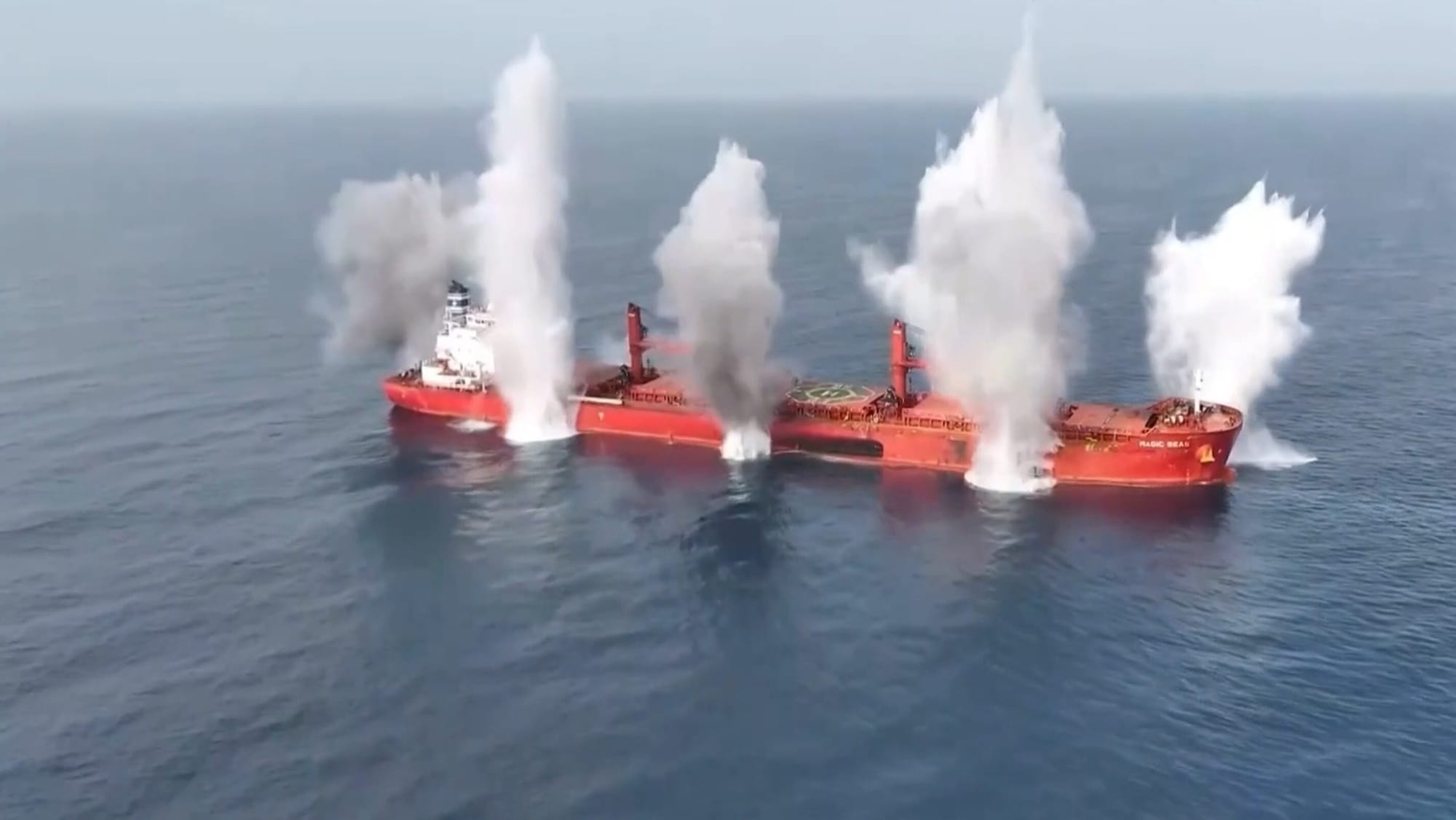
In November 2023, a paramilitary group with effective control over a coastal strip of Yemen began the most consequential maritime disruption campaign since World War II. More than 190 attacks on traffic in the Red Sea and the Gulf of Aden forced most trade routes to divert via the Cape of Good Hope, adding between ten to fourteen days to Asia-Europe crossings, skyrocketing freight and insurance costs, and sending a strategic message that the international system was not prepared to receive: non-state actors, without their own air force and without access to global financial markets, can paralyze significant fractions of world trade with accessible military technology and sufficient political motivation.
The Russell Group estimated that goods worth approximately one trillion dollars were disrupted between October 2023 and May 2024. More revealing than the scale was the pattern of selectivity: ships with links to Israel were systematically attacked; ships under Russian or Chinese flags sailed with tacit immunity. The Houthi campaign was not indiscriminate terrorism—it was calibrated economic coercion, with an explicit negotiating logic and a sponsor managing it from Tehran with funding and intelligence.
The operational distinction between a Houthi missile sinking a freighter and a Chinese export restriction closing a factory in Michigan is one of method and context—not strategic intent.
What the Houthi case demonstrated, with uncomfortable clarity, is that the vulnerability of global supply chains is not a design flaw that can be corrected with more logistical redundancy. It is a structural feature of a system built to optimize cost and speed at the expense of resilience—and this feature transforms every node of concentration into a weapon available to anyone with the motivation to use it.
The logic of economic weaponization that the Houthis applied with missiles and drones is not, however, exclusive to sub-state actors. Two examples from great powers, separated by a year, demonstrate that the same strategic grammar operates across radically different tiers of power—with more sophisticated instruments, greater deniability, and proportionally deeper systemic impact.
USA — The freezing of Russian sovereign reserves (2022):
In March 2022, the United States, in coordination with the EU, the UK, Japan, and Canada, blocked the Russian Central Bank's access to approximately $300 billion in sovereign reserves held in Western custody—the largest confiscation of sovereign central bank assets in modern history. Simultaneously, major Russian banks were excluded from the SWIFT system, interrupting their ability to settle international transactions. The instrument was not military—it was the architecture of the financial system itself that guaranteed Russia’s position in the global economy. The intended strategic effect was explicit: to raise the economic cost of the invasion of Ukraine to the point of altering Putin's calculus. The unintended side effect was equally powerful: central banks worldwide—including those of US allies—re-evaluated the security of their dollar reserves, accelerating diversification into gold and alternative currencies. The precedent was established: sovereign assets denominated in dollars can be frozen by American executive decision. No Bretton Woods agreement provided for it; no international court limited it.
China — The trade war against Australia (2020–2021):
In May 2020, Australia publicly called for an independent international investigation into the origins of COVID-19. Beijing’s response was immediate, calibrated, and overtly political: tariffs of 80.5% on Australian barley, tariffs exceeding 200% on wine, an informal blockade on coal imports, suspension of meat import licenses from four slaughterhouses, and restrictions on copper, cotton, and timber. Affected trade exceeded 20 billion Australian dollars annually. The asymmetry was stark: China absorbed about 30% of Australian exports; Australia represented approximately 2% of Chinese imports. The logic was not commercial—it was coercive and explicitly tactical: the Chinese ambassador in Canberra delivered a list of fourteen political grievances as an implicit condition for lifting the measures. Australia resisted, diversified markets, and four years later, China lifted most restrictions without obtaining substantial political concessions—but the demonstration of selective economic coercion capability remains documented as a doctrinal reference for any actor evaluating the cost of opposing Beijing.
These two examples, read alongside the Houthi case, compose the central argument of this series: deliberate economic disruption as an instrument of political coercion is not an aberration of pariah actors—it is a strategic grammar shared by actors at all levels of the international system. What varies is the vocabulary: anti-ship missiles, SWIFT blockades, or 200% tariffs are different dialects of the same language.
II. The CRINK architecture and China as coordinator
The concept of CRINK—China, Russia, Iran, North Korea—has become common in American strategic literature to describe a platform of cooperation among actors hostile to the liberal international system. The designation is useful, but its most common interpretation introduces an analytical misunderstanding with serious consequences: it treats China as just another pariah in a coalition of pariahs, when its function in the system is radically different.
Russia is the revisionist actor using military force with declared territorial ambition. Iran is the sponsor of proxies with regional disruption capabilities. North Korea is the strategic deterrence actor providing munitions, workers, and escalation cover. China is none of these—it is the coordinator-mediator that makes the system functional without participating in it directly.
Beijing facilitates the evasion of Russian sanctions through the banking system and export routes for dual-use goods. It buys Iranian oil at discounted prices, providing the Tehran regime with the liquidity that sustains the financing of the Houthis and Hezbollah. It integrates North Korea as a piece of a managed deterrence architecture: Pyongyang provided between 9.6 and 12.3 billion dollars in equipment to Russia between 2023 and 2025, receiving in return missile technology and financing that no other actor could provide. And it does all this while maintaining full access to the Western financial and commercial system—to its capital, its technology, and its markets.
Beijing does not conspire with pariahs. It manages the perimeter of the disruptive system while remaining indispensable to the system it disrupts. This ambiguity is its primary strategic weapon.
This positioning is neither accidental nor improvised—it is the product of a strategic doctrine that combines three vectors with precision: subversion that weakens Western political resolve; demonstration of capability that signals increasing costs; and the maintenance of economic dependencies that make the Western response structurally difficult to calibrate. Sanctioning China means sanctioning the system—because the system was built, over decades, with China at its industrial and financial center.
The resulting coercion architecture is asymmetric in two simultaneous senses. In the classic sense: small actors with accessible weaponry produce disproportionate economic effects. And in a new sense: the coordinator of the coercion system is also the most relevant commercial partner of the countries that this system aims to coerce. China exports appliances to Europe in the morning and manages Russia's informal sanctions system in the afternoon. There is no historical precedent for this configuration.
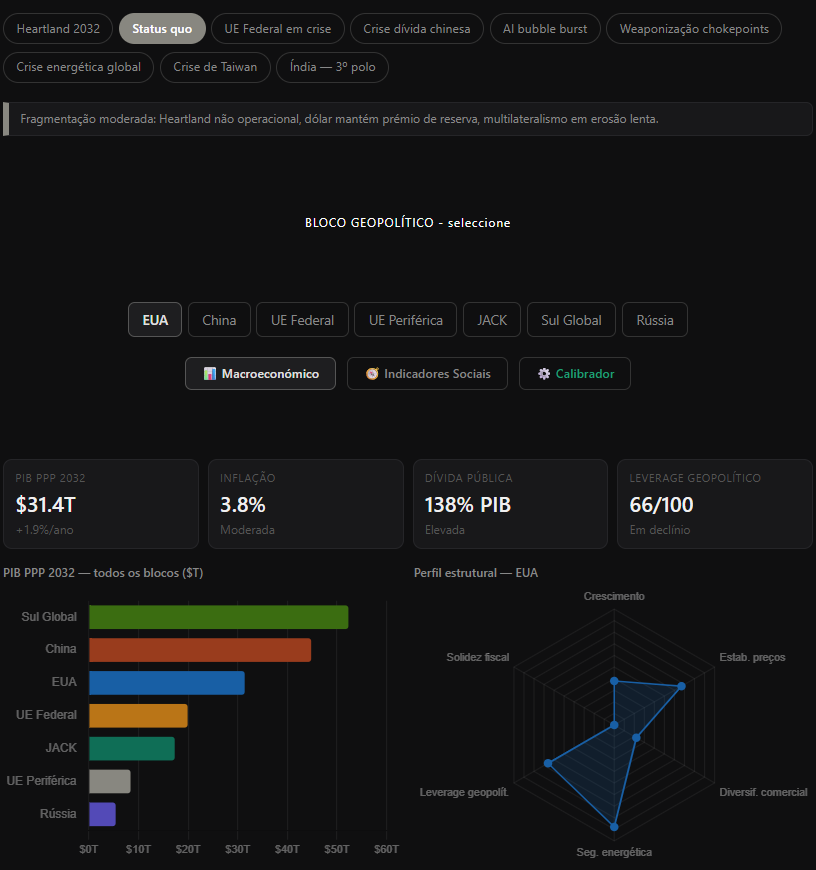
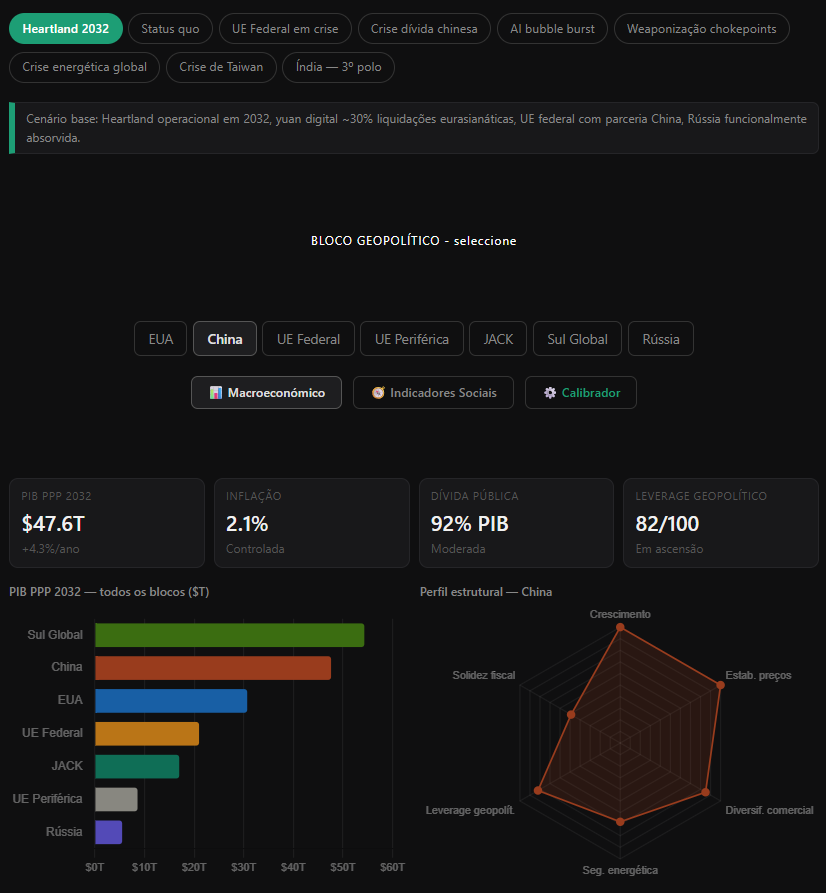
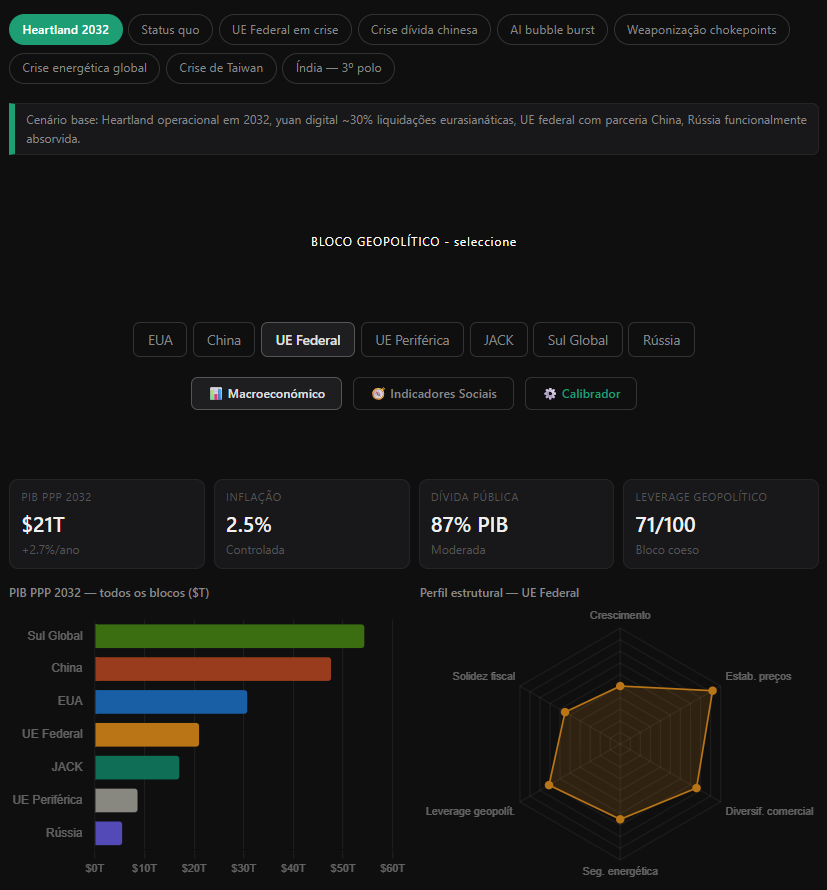
BEST SCENARIOS FOR THE US, CHINA AND THE FEDERAL EU: CHINA AND THE FEDERAL EU SHARE THE SAME SCENARIO (members only)
III. Concentration nodes as a target map
To understand the strategic logic of state economic coercion, one must first understand the architecture of vulnerability that makes it possible. Over three decades of optimization for efficiency and cost, global supply chains have accumulated a set of concentration points whose disruption produces immediate systemic effects and whose replacement cost is measured in decades and hundreds of billions of dollars.
In the domain of critical minerals, concentration is particularly extreme. China processes more than 70% of 19 of the 20 most relevant strategic minerals for the energy transition and the defense industry. For heavy rare earths—the most difficult to replace and most relevant for guidance systems, electric propulsion, and defense electronics—the dependency is even more acute. Myanmar provides critical fractions of this segment through operations controlled by ethnic armed organizations with Chinese diplomatic cover, outside any international governance structure.
Geological alternatives exist—and their mapping is relatively encouraging. Mountain Pass in California is one of the world's largest rare earth deposits; the Tanbreez project in Greenland houses high concentrations of critical heavy elements; the Kiruna deposits in Sweden and Australian Queensland offer significant extractive reserves; Canadian Quebec and Vietnam are expanding capacity in the light segment. Sub-Saharan Africa controls 68% of global cobalt through the DRC, and Ukraine holds one of the largest European lithium reserves—a factor that surely did not go unnoticed in the architecture of the critical minerals agreement between Washington and Kyiv, signed in May 2025.
The problem, however, is not geological. It is the systemic fracture between where minerals exist and where they can be processed. Australia’s Lynas Rare Earths—the only large-scale rare earth producer outside China—processes ore extracted at Mount Weld not on Australian soil, but in Malaysia, for reasons of industrial cost, proximity to Asian value chains, and access to existing chemical infrastructure. Solvay operates a separation facility in La Rochelle, France, and Estonia is developing European separation capacity—but the combined scale of these alternatives covers a marginal fraction of Western demand.
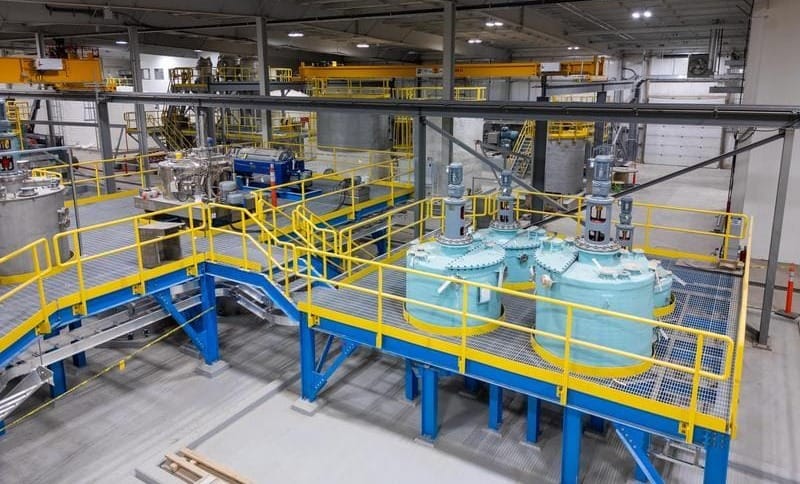
Building an integrated rare earth processing facility requires more than a billion dollars in capital, between ten to fifteen years of licensing outside established mining jurisdictions, and volumes of water and energy approximately twenty-two times higher than primary extraction—an intensity that creates severe geographic constraints and structural community resistance. Recycling offers a promising medium-term vector: Apple's Daisy robot recovers 98% of rare earths from end-of-life iPhones, and the US Department of Energy finances the ReElement program with the goal of reaching 90% recovery of rare earths from EV batteries. But these technologies are not yet at industrial scale, and their measurable contribution remains marginal.
The conclusion is structurally sobering: alternatives exist, are identified, and are being funded—but none will be operational at scale before 2030, which is precisely the horizon where the window of maximum vulnerability described in this article lies. The RAND Corporation estimates that the United States needs at least a decade and between ten to fifteen billion dollars to build an autonomous rare earth chain. The West is running—but it starts from a position of structural disadvantage accumulated over thirty years of cost optimization, and the adversary that created this disadvantage has every incentive to maintain it.
In the semiconductor domain, the most dangerous concentration node in the system is TSMC in Taiwan. The company controls approximately 90% of global chip production in the most advanced nodes—the processors that power artificial intelligence, next-generation weapon systems, and consumer electronics. Bloomberg Economics estimated that a conflict over Taiwan would cost approximately 10 trillion dollars globally—about 10% of world GDP, exceeding the economic impact of COVID-19. A rarely discussed detail: Taiwan imports 97% of the energy it consumes, with the Middle East providing 37% of its fuel. A blockade of the Strait of Hormuz could paralyze TSMC without a single missile hitting the island.
In digital infrastructure, the Baltic Sea has become, since September 2022, a laboratory for calibrated underwater sabotage. The documented pattern—Nord Stream, EE-S1 cable, BCS East-West Interlink, C-Lion1, Estlink 2, Latvian cable—is not accidental. The shallow depth of the Baltic, the proximity of Russian ports, and the difficulty of attributing underwater damage to specific actors create ideal conditions for coercion with plausible deniability. The number of anomalous ship drift activities in the region increased by 153% between February 2024 and February 2025, with 41% of the vessels involved showing affiliation with the Russian regime.
There is also a concentration node rarely mentioned in public analysis but of maximum strategic importance: the Dutch company ASML is the world's only manufacturer of extreme ultraviolet (EUV) lithography machines, indispensable for manufacturing any chip below 7 nanometers. No advanced semiconductor factory can exist without these machines. An attack on this facility—or the political interdiction of its exports—would paralyze the entire global next-generation semiconductor chain for a period of years, not months. The concentration of critical capacity in a single building in a Dutch city is one of the most disturbing facts of contemporary political economy.
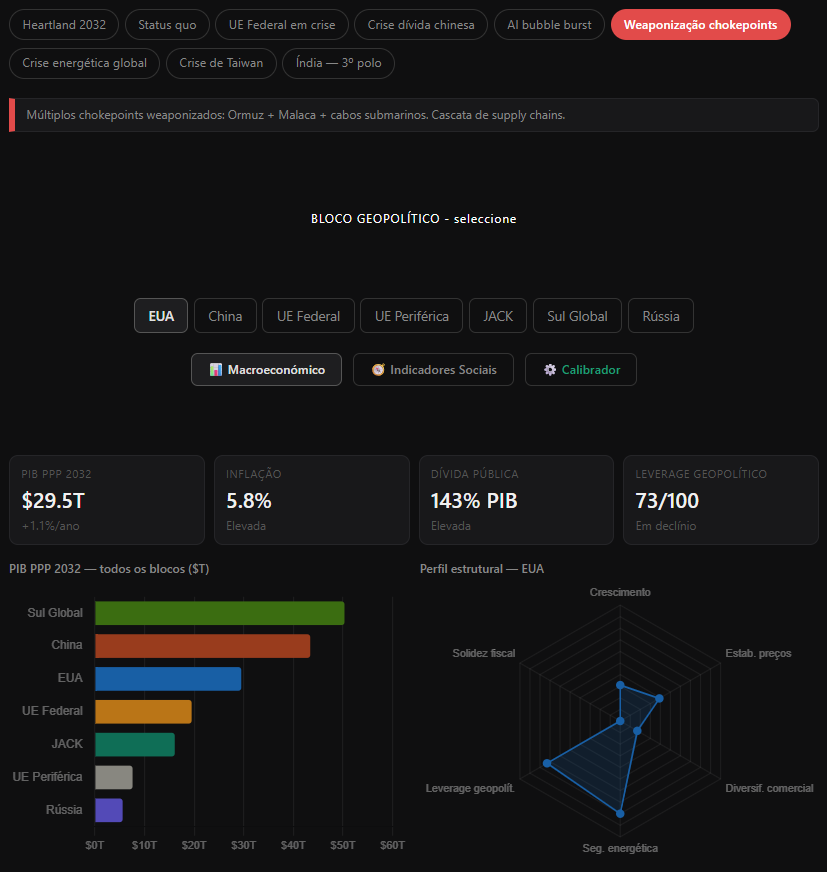
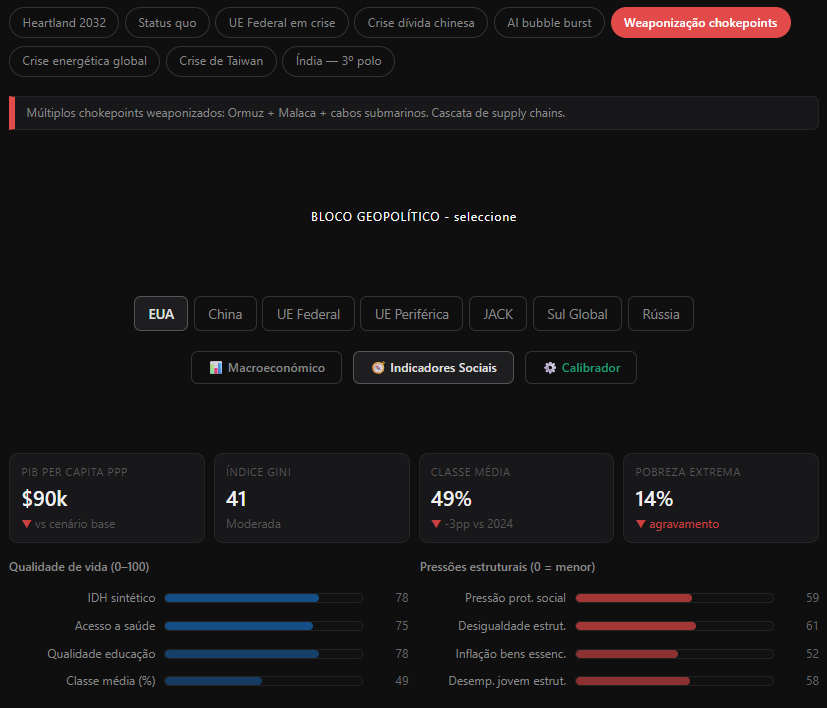
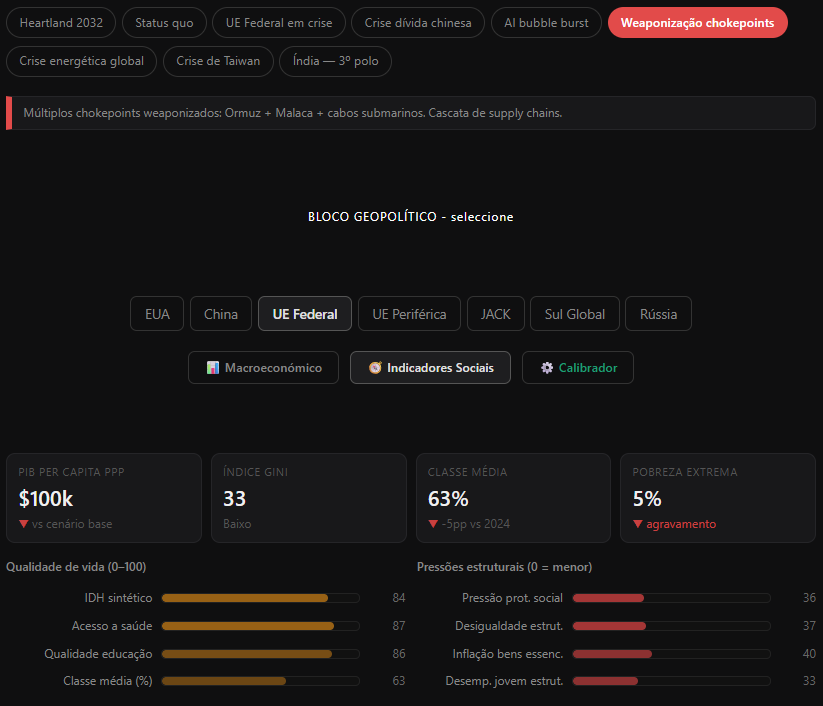
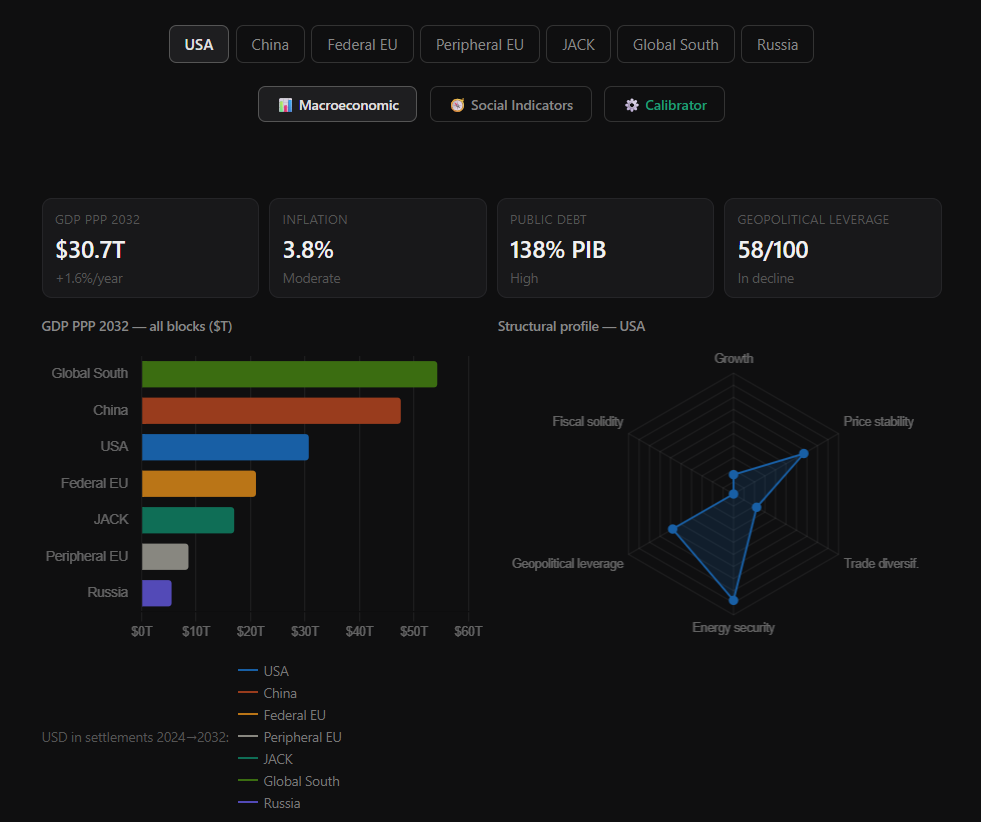
The US is the only "winner" of chokepoint weaponization; its population is one of the main losers (members only).
IV. The parallel the system does not want to recognize
The analysis to this point has built two arguments in parallel: on one hand, the growing capacity of sub-state and pariah actors to use supply chain disruption as an instrument of political coercion; on the other, the coordination architecture that China manages to keep this pressure operational without direct exposure. To these two arguments, a third dimension must be added, often underestimated in Western analysis: the Belt and Road Initiative as the system's strategic anchoring infrastructure.
The BRI is not just an infrastructure investment program—it is the logistical architecture that converts Chinese diplomatic influence into long-term structural dependency. Ports like Chancay in Peru, Hambantota in Sri Lanka, or Gwadar in Pakistan are not just commercial assets: they are nodes of an alternative supply chain network that, once built and financially committed, is extraordinarily difficult to reverse. Yuan-denominated credit, refineries funded by Chinese state consortia, and decades-long critical mineral offtake contracts create a lock-in that no subsequent diplomatic resolution can easily undo.
Furthermore, the BRI functions as a coordination forum for a Global South that is resentful and seeking a political-economic model alternative to the Western liberal consensus—a Global South who lived through centuries of European colonization, that lived through decades of conditionality imposed by the IMF and the World Bank and finds real traction in the Chinese narrative of 'cooperation without interference'. However, it is necessary to preserve an analytical ambiguity that the debate tends to collapse: the Global South is not a coherent strategic actor nor a consolidated ally of Beijing. It is a collection of heterogeneous and often dysfunctional societies, a set of economies with deeply divergent interests and development models that China has managed to frame within a common narrative of anti-hegemonic resentment, without this implying binding strategic loyalty. Many of these countries negotiate simultaneously with Washington, Beijing, and Brussels, maximizing their position as pivots—which makes them, paradoxalilly, both an asset for China and an open competitive space for non-aligned powers. The central argument of this article is that there is yet another element that completes the picture—and it is the most politically uncomfortable one.
The United States has institutionalized economic weaponization with a depth and sophistication without historical precedent. The semiconductor export controls introduced between 2022 and 2025 are the most comprehensive export sanctions ever applied by a democracy in peacetime. The 2025 tariffs on China—which in April reached 145% on a significant fraction of imports—constitute a deliberate interruption of global value chains with direct costs to consumers, producers, and allies worldwide. American extraterritorial sanctions apply domestic legislation to companies in third countries that trade with designated entities—an exercise of extraterritorial sovereignty that has no parallel in conventional international law.
When Washington restricts chip exports and Beijing restricts antimony exports, the instrument is distinct but the logic is identical: using economic dependencies as a lever of political power. The difference is that one has allies and the other has proxies.
China responded to the American doctrine of technological containment with the same instrument in mirror: export restrictions on graphite, antimony, rare earth magnets, and other critical materials, calibrated in direct response to each round of American controls. In April 2025, restrictions on seven critical elements and their derived magnets caused the temporary closure of a Ford factory in Chicago and left countless Western companies competing for non-existent alternative supplies. European rare earth prices reached up to six times those practiced in the Chinese market.
The international system is, therefore, witnessing the emergence of a new implicit norm: the disruption of strategic supply chains is a legitimate instrument of foreign policy, provided it is exercised with sufficiently institutional instruments—tariffs, export controls, licensing, sanctions—to avoid classification as an act of war. Pariah state economic terrorism and great power economic coercion differ in three dimensions: in the actor's deniability, in the instrument's sophistication, and in the access the actor has to the system it aims to disrupt. They do not differ in the intention to alter the adversary's behavior through deliberately imposed economic costs.
 amorsantos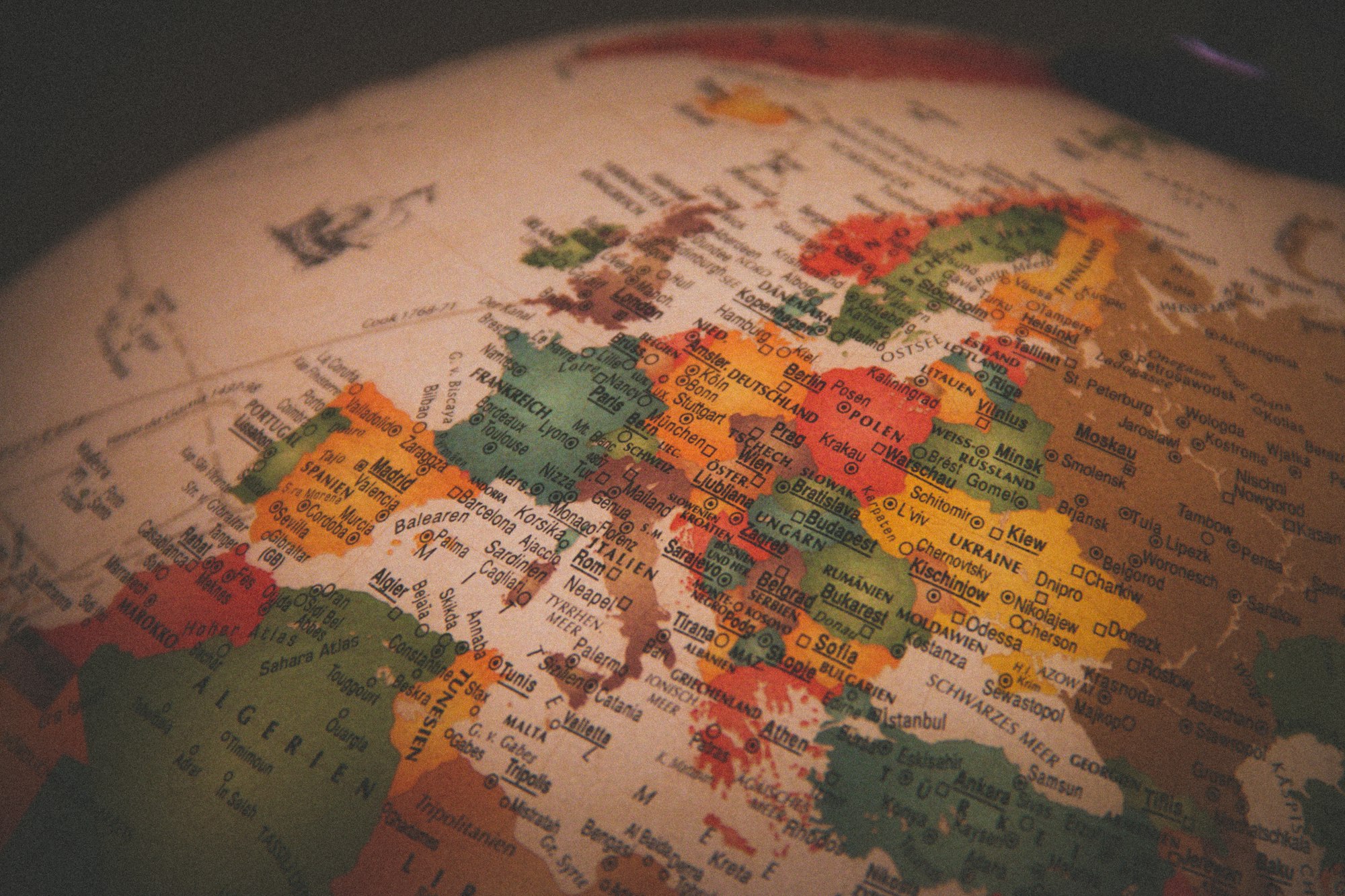
V. The window of maximum vulnerability
The current moment is historically unique for a specific reason: energy transition and defense supply chains are simultaneously in a phase of accelerated consolidation and at the peak of their structural vulnerability. The transition to electric vehicles, renewable energy, next-generation weapon systems, and artificial intelligence infrastructure has created new dependencies on minerals, semiconductors, and components for which alternative supply chains do not yet exist at scale.
Actors who perceive this window—and evidence suggests that both Beijing and Moscow perceive it clearly—have a structural incentive to maximize disruption precisely now, before the alternative supply chains the West is building reach operational scale. The European Critical Raw Materials Act selected 60 strategic projects, but most will not be operational before 2030. The American strategy for semiconductor reshoring through the CHIPS Act is moving forward, but factories take three to four years to build and decades to mature in competence. Response mechanisms exist—but they are slow, and the window of vulnerability is now.
This temporal asymmetry is the strongest argument for the central thesis of this article. It is not necessary to postulate bad faith or conspiratorial coordination among CRINK members to predict that the 2025-2030 period will be marked by increasing episodes of deliberate disruption of strategic supply chains—it is enough to recognize that the structural incentives for such disruption are maximum precisely when the Western response capacity is still under construction.
Conclusion: a problem of strategic grammar
The argument of this article is not that pariah states, Iranian proxies, and North Korean hackers are equivalent to democratically elected governments applying tariffs. They are not even comparable to the Russian autocracy or the illiberal Chinese model. The moral and institutional difference is real and matters. The argument is more precise: the international system has developed a strategic grammar in which deliberate economic disruption—regardless of the specific instrument—has become a normal component of the foreign policy of multiple actors with radically different objectives and capabilities.
In this shared grammar, China occupies a unique position: it is not an actor that disrupted the system; it is an actor that learned to manage the ambiguity between disruption and indispensability. Its deepest strategic power lies not in the missiles it can launch nor in the sanctions it can impose—it lies in the fact that any serious Western response to its coercion implies costs that Western countries themselves are not yet prepared to bear.
The response to this problem cannot be market-driven—markets were the mechanism that produced the dependency. It requires deliberate political choices about the cost that democracies are willing to pay for their strategic autonomy.
Article II of this series will examine how "non-aligned powers"—the European Union, Canada, Australia, India, and Mercosur—are responding to this challenge, with what instruments, and with what likelihood of success. The central question is not technical—it is political: how much will strategic sovereignty cost, and who will pay that cost?
Article I of III | Economic Geopolitics Series
This edition of Chronicles of the Atopicosphere is part of a series of three articles on economic disruption, strategic sovereignty, and the impact on citizens.
Article II: Sovereign Powers and Multipolarity — Strategic Sovereignty and the Choice Between Vassalage and Sovereign Multipolarity
Article III: The Cost of Citizenship — Structural Inflation, Governance, and the Social Contract