MARIO DRAGHI, IL MAGO DELLA BUROCRAZIA
Published on September 10, 2026


Anatomy of a Good Diagnosis for Modern Bureaucrats
The report The Future of European Competitiveness, presented by Mario Draghi in September 2024, will go down in the European Union’s institutional history as a document that exposed—with statistical coldness—certain triumphalist illusions held by Brussels. For the first time, a text commissioned by the very heart of EU power bluntly admitted what reality had long made evident: the European growth model has collapsed, and the productivity gap vis-à-vis the United States has shifted from a cyclical slowdown into a structural chasm. There are no European technology companies founded in the last twenty years that have reached a valuation of €100 billion. Draghi portrays Europe as an industrial museum that, through omission and complacency, missed out on the greatest wave of wealth creation since the Industrial Revolution.
One of the document’s undeniable merits lies in identifying the "regulatory trap" as an autoimmune disease afflicting the bloc. In its attempt to turn regulation into its primary geopolitical export—proudly dubbed the "Brussels Effect"—the European Commission transformed the EU ecosystem into a bureaucratic quagmire. The unchecked proliferation of directives and regulations failed to curb American or Chinese tech giants; instead, it merely imposed a confiscatory tax on domestic innovation, stifling startups in their infancy and acting as a protective shield for entrenched, obsolete industries.
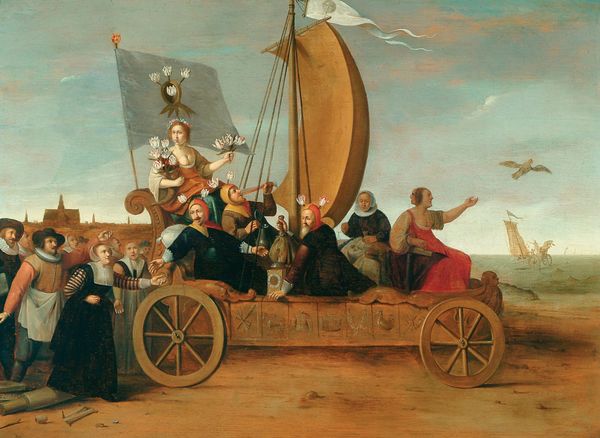
Mario Draghi is a “vero” European bureaucrat, as demonstrated in August 2011.
The Draghi Report fails not due to technical incompetence, but because of institutional complicity. By diagnosing the European crisis as merely a problem of insufficient scale and investment, the report repeats the same analytical error of the 1980s (which led to stagnation) and masks the true nature of the bloc's tragedy: the EU's transformation into a system of extractive institutions that underpin a form of "guild politics" serving its core powers. In proposing an €800 billion injection managed from Brussels, Draghi does not offer a clean break; instead, he proposes a final attempt at public financing to save the rent-seeking models of the German industrial guild, the French agricultural guild, and the Dutch financial-logistics guild—thereby perpetuating stagnation under the guise of strategic autonomy.
Regarding solutions, the Draghi Report falls prey to the tragedy of institutional continuity. It suffers from several untenable logical contradictions: it identifies a bottleneck caused by excessive centralizing intervention yet prescribes, as an antidote, the greatest exercise in central planning in the history of European integration. This top-down mobilization of €750–800 billion in public capital revives the naive (or cynical?) belief that the Brussels bureaucracy possesses the prescient ability to "pick winners" and architect the technological frontier.
Worse still, Cohesion Policy embodies one of the greatest contradictions in his work: he criticizes the governance and inefficiency of these funds yet proposes their reprogramming and centralization rather than their abolition. This approach refuses to address the root of Europe’s structural malaise: a regional, parochial form of capitalism fueled by cohesion funds and state subsidies, where capital is allocated based on geopolitical balance and national quotas rather than on the rigorous merit of projects or market validation. By attempting to remedy market failures with more state intervention, and state failures with greater EU integration, Europe’s leadership refuses to acknowledge that the current stagnation is not merely a recent setback. It is the direct result of a doctrinal choice made in the 1970s and 1980s—that of substituting innovation and genuine productivity with the expedient of expanding the internal market.
If the European Union is currently held hostage by its own history, its salvation will not come from yet another financial package—or series of packages—managed from the center.
Will it come, perhaps, from shocks of internal multilateralism capable of breaking the paralysis of consensus and shaking the Union’s bureaucratic foundations?