The European Heatwave and Energy as a Differentiating Strategic Asset
Published on June 30, 2026

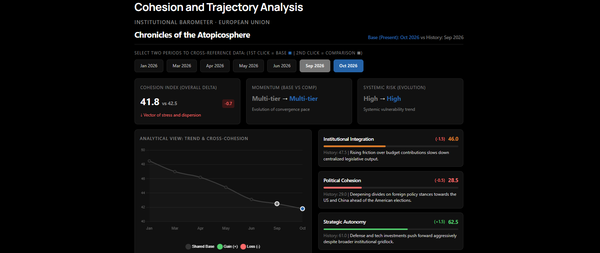
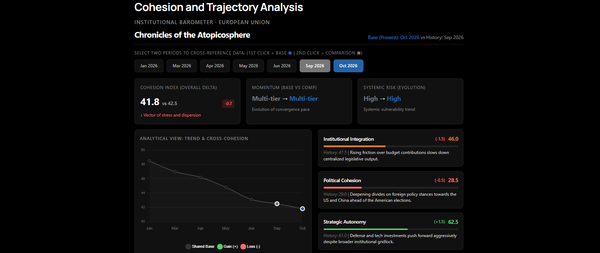
The record-breaking heatwave that struck Europe—bringing temperatures above 40°C and causing over 1,300 deaths in just a few days—is highlighting two conflicting trends that will shape the near future of public and private energy grid management. On one hand, it underscores the need for cities to channel investment into sustainable, climate-resilient, and energy-efficient infrastructure while simultaneously ensuring affordable access to the growing residential demand for energy. On the other, it exposes the vulnerability of AI data center infrastructure to climate risks such as extreme heat, drought, flooding, and wildfires—particularly given that 79% of global capacity already operates in high-risk zones, with more than half located in markets facing chronic heat or water stress. The sudden surge in cooling demand—which typically accounts for 30–40% of these centers' electricity consumption—drives up energy use and places strain on both power grids and water resources. Insurance premiums for data centers are expected to rise significantly; meanwhile, Europe—the world’s fastest-warming continent and one with an urgent need for data infrastructure investment—is facing increasingly frequent, "near-annual" heatwaves. This makes the climate resilience of digital infrastructure a central issue for public policy, energy planning, and financial risk management. However, Europe cannot afford to overlook the strategies already being implemented by major North American and Chinese operators in this area. For this reason, Chronicles of the Atopicosphere is preparing a series of analyses and articles on these topics for its Autumn 2026 edition. Read a preview of that edition below:
Energy as a Strategic Battlefield: Scenarios for Tech-Energy Vertical Integration
I. The Underlying Dynamic: Why This Moment Is Different
Data center energy consumption already accounts for approximately 1–2% of global electricity demand, with projections for 2030 ranging from 3% to 8%—a figure subject to increasing uncertainty with each new generation of language models and edge inference. What is changing structurally is not the volume, but the nature of the required energy consumption: ultra-low latency, 99.999% availability, and geographically constrained locations (proximity to fiber backbones, low-latency financial market zones, and talent clusters).
This specific nature transforms energy from a commodity into a differentiating strategic asset. And differentiating strategic assets are always, eventually, internalized.
The question is not whether companies within the AI-semiconductor loop will enter the energy production value chain; they are already doing so. The question is the power architecture under which this occurs—and who gets left out.
II. The Vertical Integration Axis: Three Degrees of Depth
Before outlining specific scenarios, it is useful to map the landscape of integration possibilities:
Grade 1 — Priority contracting (already underway): Long-term Power Purchase Agreements (PPAs), deals with nuclear operators (Microsoft-Constellation/TMI, Google-Kairos), and the acquisition of dedicated renewable capacity. The company does not operate the generation assets itself but secures preferential access at a fixed price.
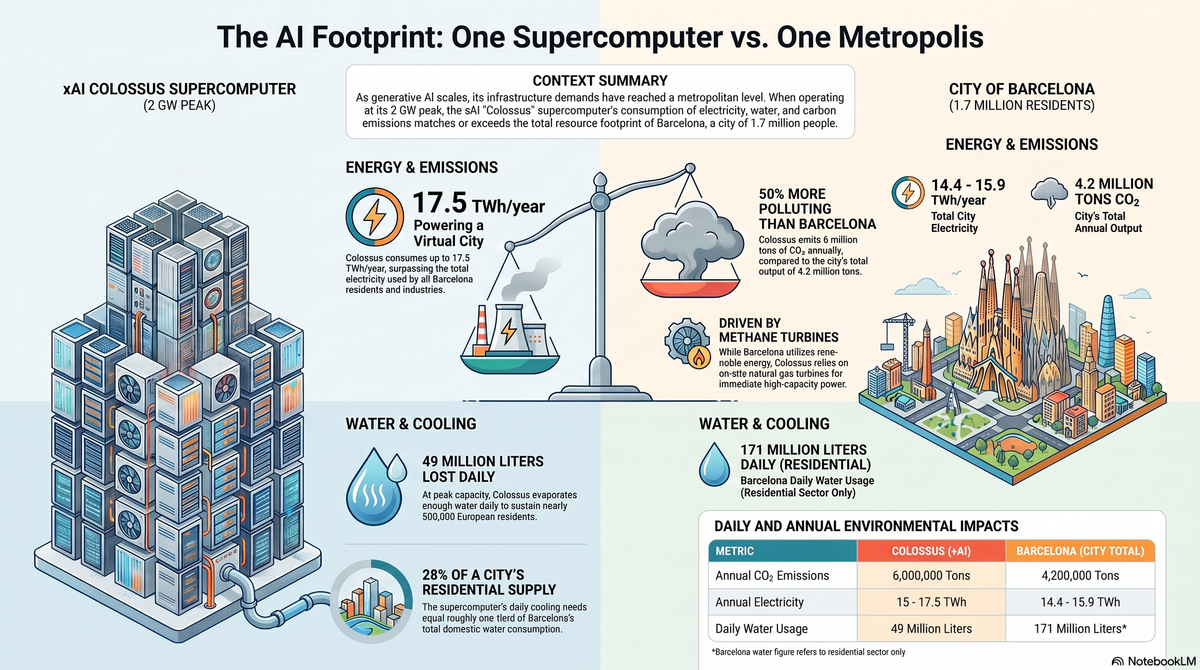
Grade 2 — Co-ownership and operational control: Joint ventures with utilities, construction of dedicated generation networks (the xAI/Colossus case involving gas turbines in Memphis is a prime example), and private microgrids operating in parallel with—or with a controlled connection to—the public grid.
Grade 3 — Full-stack integration: The company acts simultaneously as an energy producer, distributor, and consumer—with sales to third parties being merely residual or regulatory in nature. The public grid becomes a backup or a secondary market.
The gradient between Grade 1 and Grade 3 largely defines the topology of the following scenarios. Finally, one of the scenarios currently being developed:
Scenario B — The Balkanization of Grids (Islands of Abundance, Oceans of Scarcity)
Core logic: Instead of a systemic capture of energy assets, what emerges are private microgrid islands centered around data center campuses—zones of electricity abundance that are technically disconnected or semi-disconnected from the public grid. The national grid loses a critical mass of high-value consumers (who paid premium prices and stabilized the grid through predictable consumption), leaving it with a more volatile and less profitable consumption mix.
Feedback mechanism: The deterioration of the public grid creates a vicious cycle: lower revenues → reduced investment in maintenance and modernization → increased volatility → more companies opting for private microgrids → further revenue loss. Fixed grid costs are spread across a shrinking consumer base, driving up prices—which, in turn, accelerates the exodus of large industrial consumers with the resources to build alternatives.
Geographic impact: The territorial dimension is critical. Data centers cluster in areas with specific conditions (cooling water, fiber connectivity, cheap land, low regulatory instability). These areas become enclaves of electricity superabundance surrounded by peripheral regions characterized by aging grids and rising prices. The geography of energy poverty is reorganizing around proximity—or distance—from tech clusters.
Read more about this topic in the Autumn edition of Chronicles of the Atopicosphere